SSR vs. CSR in Next.js: Which Wins for SEO?
Compare SSR vs. CSR in Next.js to boost your SEO. Discover which rendering strategy truly wins for search engine performance and user experience. Optimize your Next.js site now!
SSR vs. CSR in Next.js: Which Wins for SEO?
In the rapidly evolving world of web development, optimizing for both user experience and search engine performance is paramount. With frameworks like Next.js, developers gain powerful tools to build dynamic, high-performance applications. But a crucial decision often arises: should you opt for Server-Side Rendering (SSR) or Client-Side Rendering (CSR)? This choice profoundly impacts your site's SEO, initial load times, and overall user satisfaction.
This comprehensive guide will dive deep into the intricacies of SSR and CSR within Next.js, comparing their mechanisms, advantages, disadvantages, and ultimately, which strategy truly wins for SEO. We'll also explore Next.js's hybrid capabilities and provide practical advice to help you make an informed decision for your next project.
Understanding Rendering Strategies in Next.js
Before we pit SSR against CSR, let's establish a clear understanding of how each rendering approach works and what they entail in a Next.js environment.
Server-Side Rendering (SSR) in Next.js
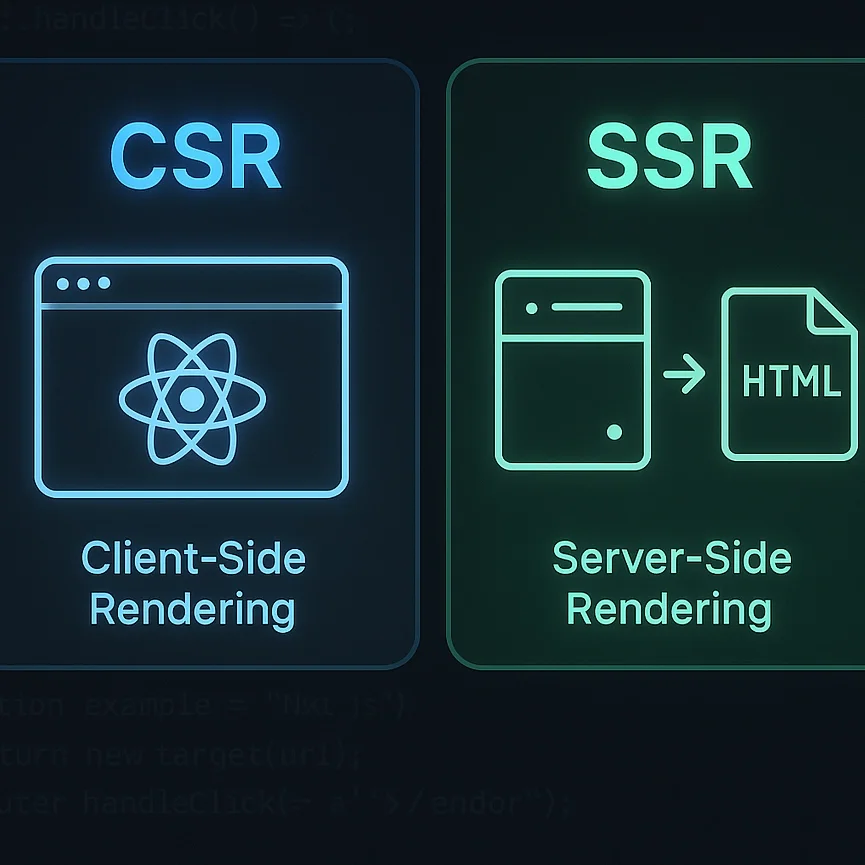
Server-Side Rendering (SSR) is a rendering strategy where your web page's HTML is generated on the server for each request. When a user requests a page, the server fetches the necessary data, renders the React components into a complete HTML string, and then sends that pre-rendered HTML to the client's browser.
In Next.js, you typically implement SSR using the getServerSideProps function. This function runs exclusively on the server at request time, allowing you to fetch data and pass it as props to your page component.
"SSR ensures that your users and search engine crawlers receive a fully hydrated HTML page from the get-go, minimizing content shifts and improving perceived performance."
Key Advantages of SSR for SEO
- Superior Crawlability and Indexing: Since the server sends a fully formed HTML document, search engine bots (like Googlebot) can easily crawl and index all your content without needing to execute JavaScript. This makes SSR an excellent choice for content-heavy sites where SEO is a primary concern.
- Faster Time to First Byte (TTFB): Users receive the initial HTML document much faster, as the browser doesn't need to download and execute JavaScript to see content. This contributes to a quicker perceived load time and a better Lighthouse score for TTFB.
- Improved User Experience on First Load: Content is immediately visible, leading to a better experience, especially for users with slower internet connections or less powerful devices. This enhances Core Web Vitals like Largest Contentful Paint (LCP).
- Reliable Social Media Sharing: Open Graph tags and other meta data are readily available in the initial HTML, ensuring rich previews when sharing on platforms like Facebook or Twitter.
Potential Disadvantages of SSR
- Increased Server Load: Every request requires the server to render the page, which can consume significant server resources, especially for high-traffic sites or pages with complex data fetching.
- Slower Subsequent Navigations (if not optimized): Without proper caching or client-side hydration, subsequent navigations might still incur server-side rendering overhead, making them feel less instant than a true Single Page Application (SPA).
- Potential for Slower TTFB on Complex Pages: If server-side data fetching or rendering logic is extremely heavy, the time it takes for the server to generate and send the HTML can still be substantial.
Practical Example: An e-commerce product page. When a user navigates to a product, the server fetches the latest pricing, stock levels, and product descriptions from the database, renders the complete page, and sends it to the browser. This ensures search engines can easily index all product details, and users see up-to-date information immediately.
Client-Side Rendering (CSR) in Next.js
Client-Side Rendering (CSR) is a rendering approach where the browser receives a minimal HTML shell and then downloads JavaScript bundles. This JavaScript then takes over, fetches data, and renders the content directly in the user's browser.
In Next.js, CSR is the default behavior for pages without a data fetching function like getServerSideProps or getStaticProps. You might also explicitly fetch data client-side using React's useEffect hook or a library like SWR or React Query.
Key Advantages of CSR for SEO (with caveats)
- Fast Subsequent Page Loads: Once the initial JavaScript is loaded, subsequent navigations within the application can be very fast, as only necessary data and UI updates are fetched, providing an SPA-like experience.
- Reduced Server Load (after initial load): The server's primary role is to serve the initial JavaScript bundle, reducing the rendering burden compared to SSR.
- Rich, Interactive User Interfaces: CSR excels in building highly dynamic and interactive applications with complex user interfaces that respond instantly to user input.
- Efficient Data Fetching for Personalized Content: Ideal for displaying user-specific data after authentication, where the content cannot be pre-rendered for everyone.
Potential Disadvantages of CSR for SEO
- SEO Challenges for Initial Indexing: While Google has made significant strides in rendering JavaScript, relying solely on CSR means search engines need to execute JavaScript to see your content. This can delay indexing, sometimes miss content if JavaScript execution fails, or be problematic for other search engines that don't have robust JavaScript rendering capabilities.
- Slower Initial Page Load (perceived): Users often see a blank screen or a loading spinner until all the JavaScript is downloaded, parsed, executed, and the content is rendered. This negatively impacts Core Web Vitals like FCP and LCP.
- Poor Core Web Vitals if not optimized: Heavy JavaScript bundles and delayed content rendering can lead to lower FCP, LCP, and potentially Cumulative Layout Shift (CLS) scores.
- Reliance on JavaScript: If a user has JavaScript disabled or if there's an error in the JavaScript, the page may appear blank or broken.
Practical Example: A user dashboard for a SaaS application. After logging in, the dashboard loads user-specific charts, notifications, and settings entirely client-side. Since this content is behind authentication and highly dynamic per user, initial SEO is less of a concern than responsiveness and interactivity.
Next.js's Hybrid Approach: The Best of All Worlds?
One of Next.js's most powerful features is its ability to allow developers to choose the rendering strategy on a per-page basis. Beyond SSR and CSR, Next.js also offers Static Site Generation (SSG) and Incremental Static Regeneration (ISR), which often provide superior SEO benefits over pure SSR or CSR.
Static Site Generation (SSG)
With Static Site Generation (SSG), pages are rendered into HTML at build time. This means the HTML, CSS, and JavaScript are generated once and then served as static files from a CDN (Content Delivery Network). This is the fastest and most performant rendering strategy.
In Next.js, you use getStaticProps (and optionally getStaticPaths for dynamic routes) to implement SSG.
SEO Benefits: Unbeatable speed, instant TTFB, perfect for crawlability as the HTML is pre-built. Ideal for content that doesn't change frequently.
Use Cases: Blogs, marketing pages, documentation, portfolios, e-commerce product listings that don't change prices or stock often.
Incremental Static Regeneration (ISR)
Incremental Static Regeneration (ISR) builds upon SSG by allowing you to update static pages after they've been deployed, without needing a full rebuild of the site. You specify a revalidate time in getStaticProps, and Next.js will re-generate the page in the background when a new request comes in after the specified interval.
SEO Benefits: Combines the speed and SEO advantages of SSG with the ability to serve fresh content. Pages remain performant while ensuring content doesn't become stale.
Use Cases: Blogs that get updated regularly, news sites, product pages with occasional price or stock changes.
"Next.js's strength lies in its flexibility. It allows you to select the optimal rendering strategy for each page, ensuring you can tailor performance and SEO precisely to your content's needs."
Which Wins for SEO? SSR vs. CSR Head-to-Head
When it comes to SEO, the rendering strategy you choose can significantly impact how search engines perceive and rank your content. Let's directly compare SSR and CSR on key SEO metrics.
Crawlability and Indexing
- SSR: The clear winner. Search engine crawlers receive fully rendered HTML immediately, making all content easily discoverable and indexable. This is crucial for comprehensive content indexing, especially for smaller search engines or specific content types.
- CSR: Requires search engine bots to execute JavaScript to discover and render content. While Google is very good at this, it still adds a step to the indexing process, potentially delaying content visibility or causing issues if JavaScript fails to execute correctly. For Bing, DuckDuckGo, and other crawlers, CSR can be a major hurdle.
Page Load Speed (Core Web Vitals)
- SSR: Generally performs better on initial load metrics like Largest Contentful Paint (LCP) and First Contentful Paint (FCP). Since the server delivers rendered content, the browser can display meaningful content much faster, leading to a better user experience and higher Core Web Vitals scores.
- CSR: Can suffer from poor LCP and FCP scores if not meticulously optimized. The browser must download, parse, and execute JavaScript before the main content becomes visible, often resulting in a blank screen or a loading spinner initially. While subsequent navigations might be faster, the initial experience can be detrimental to SEO.
- Note: Core Web Vitals like Interaction to Next Paint (INP) and Cumulative Layout Shift (CLS) can be affected by both strategies depending on how well they are implemented. SSR can still have CLS if content shifts after hydration, and CSR can have poor INP if JavaScript is heavy and blocks the main thread.
User Experience (UX) and Engagement
- SSR: Provides a faster perceived initial load, which can reduce bounce rates and improve user satisfaction, especially for users on slower networks. Users see content quickly, fostering immediate engagement.
- CSR: Offers a smoother, app-like experience for subsequent navigations, with instant transitions and reduced page reloads. This can lead to higher engagement for complex applications where users spend a lot of time interacting with dynamic data. However, a poor initial load can deter users before they even reach this engaging phase.
Content Relevancy and Freshness
- SSR: Excellent for displaying real-time, highly dynamic content that needs to be absolutely fresh on every request. This is critical for applications where outdated information could be detrimental (e.g., stock tickers, live news feeds).
- CSR: Can also display real-time updates within a page once loaded, but the initial content loaded might be older if not paired with SSR or SSG. Good for authenticated, personalized content where freshness isn't a global SEO concern.
- SSG/ISR: Ideal for content that is largely static but benefits from being up-to-date (ISR) or perfectly current at build time (SSG).
Making the Right Choice: When to Use What
The "winner" isn't universal. The optimal rendering strategy depends entirely on your project's specific requirements, content type, and SEO goals. Here’s a breakdown to guide your decision-making in Next.js:
Choose SSR (getServerSideProps) when:
- SEO is paramount for highly dynamic content. Your pages contain content that changes frequently (e.g., daily price updates, real-time news articles) and must be indexed by search engines.
- You need up-to-the-minute data. The content on the page must always be the freshest possible for every user.
- Initial page load performance and TTFB are critical. You want users to see meaningful content as quickly as possible without waiting for JavaScript execution.
- Example: An airline flight status page, where real-time departure and arrival information is crucial for users and needs to be indexed for specific flight queries.
Choose CSR (client-side data fetching) when:
- Building highly interactive, authenticated user dashboards or admin panels. For pages behind a login, where SEO isn't a primary concern, and interactivity is key.
- Content is highly user-specific and dynamic after login. Data depends on user sessions and cannot be pre-rendered universally.
- You prioritize fast subsequent navigation and an app-like feel. Once the initial load is complete, users expect seamless transitions without full page reloads.
- Example: A personalized financial dashboard showing a user's portfolio and transaction history.
Consider SSG (getStaticProps) when:
- Your content is largely static and changes infrequently. This includes marketing pages, documentation, 'About Us' pages, blog posts, or e-commerce categories.
- You want the best possible initial load speeds and Core Web Vitals. SSG pages are pre-built HTML, offering unparalleled performance and resilience.
- SEO is a top priority for static content.
- Example: A static landing page for a product launch, a company's legal terms and conditions, or an archived blog post.
Consider ISR (getStaticProps with revalidate) when:
- Your content is mostly static but requires periodic updates. You want the benefits of SSG (speed, SEO) but need to ensure content doesn't become stale (e.g., a blog that publishes daily).
- You want fresh content without a full site rebuild. This is the sweet spot for many content-driven sites.
- Example: A blog category page that needs to display new posts frequently, or a product listing page where prices change a few times a day but not on every single request.
General SEO and Performance Optimization Tips for Next.js
Regardless of your chosen rendering strategy, certain optimization techniques are universally beneficial for any Next.js application aiming for top-tier SEO and performance:
- Image Optimization: Utilize Next.js's <Image> component for automatic image optimization, lazy loading, and responsive sizing. This dramatically improves LCP.
- Code Splitting and Lazy Loading: Use dynamic imports (next/dynamic) to load components only when needed, reducing initial bundle sizes.
- Caching Strategies: Implement robust caching for data, assets, and pages where appropriate to reduce server load and improve delivery speed.
- Minification and Compression: Ensure your JavaScript, CSS, and HTML are minified and served with Gzip or Brotli compression.
- Mobile-First Design: Prioritize responsive design and optimize for mobile devices, as a significant portion of web traffic comes from mobile, and Google uses mobile-first indexing.
- Semantic HTML: Use appropriate HTML5 tags (<header>, <nav>, <main>, <article>, <aside>, <footer>) to provide structure and meaning to your content for search engines.
- Proper Meta Tags and Structured Data: Ensure every page has unique, compelling <title> and <meta name="description"> tags. Implement Schema.org structured data (JSON-LD) to help search engines understand your content better and enable rich snippets.
- Monitor Core Web Vitals: Regularly track your FCP, LCP, CLS, and INP using tools like Google Lighthouse, PageSpeed Insights, and Google Search Console to identify and address performance bottlenecks.
- Accessibility: A highly accessible website is often a highly performant and SEO-friendly website.
Conclusion: The Smart Choice is a Hybrid Approach
In the perennial debate of SSR vs. CSR for SEO in Next.js, there isn't a single "winner." Instead, the most effective strategy is often a hybrid approach, leveraging the strengths of each rendering method for different parts of your application.
Next.js empowers developers to make intelligent, page-specific rendering decisions. For content that needs maximum SEO visibility and fast initial loads, SSR, SSG, or ISR are generally the superior choices. For highly interactive, authenticated experiences where initial SEO is less critical, CSR can offer a more fluid user experience after the initial load.
By understanding your content's nature, your audience's needs, and your specific SEO goals, you can harness the full potential of Next.js to build a blazing-fast, SEO-optimized, and user-friendly web application.
Ready to optimize your Next.js site? Analyze your existing pages, identify your SEO priorities, and start implementing the best rendering strategies today. If you need expert guidance to fine-tune your Next.js performance and SEO, don't hesitate to reach out!
Explore the official Next.js documentation to deepen your understanding of these powerful rendering features and elevate your web projects.